
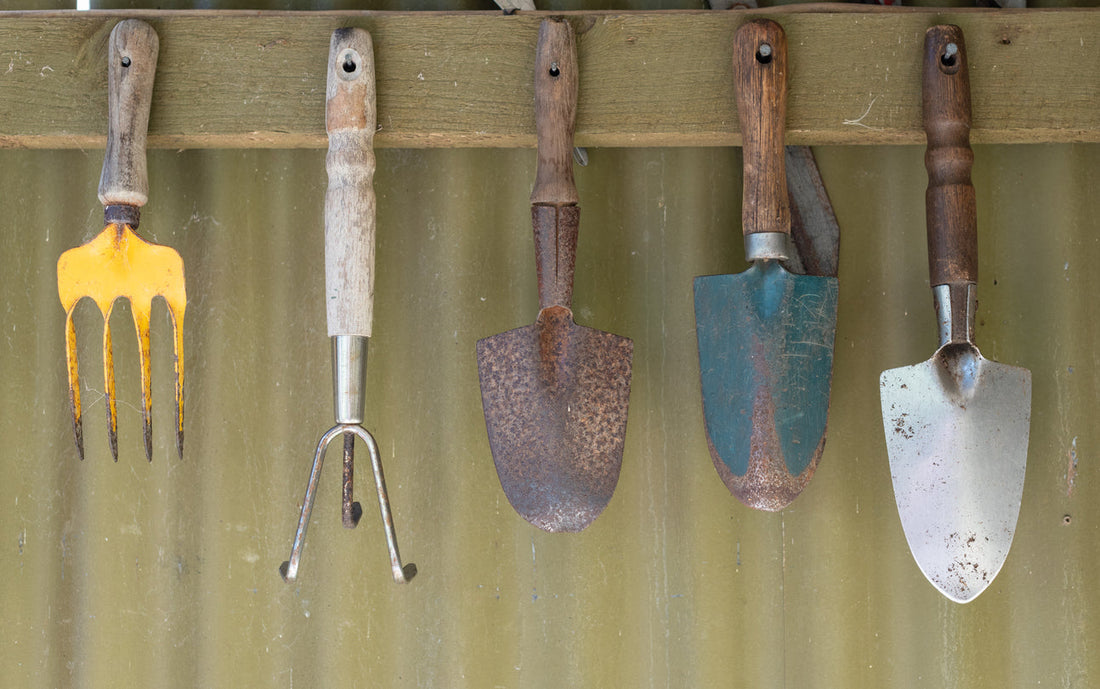
Quick Answer: To clean garden tools, start by removing caked-on dirt with a stiff brush or putty knife, wash metal parts in soapy water, disinfect blades to prevent spreading plant pathogens, and finish by drying, sharpening, and oiling everything. Regular cleaning after each use prevents rust, keeps cutting edges sharp, and extends the life of your garden equipment by years.
A good set of gardening tools can last decades if you take care of them. Ignore them, and even the best-made pruning shears, shovels, and garden shears will corrode, dull, and fall apart in just a few seasons. Dirt holds moisture against metal surfaces, which leads to rust. Sap and plant debris harbor disease. Dull blades tear plants instead of cutting them cleanly, leaving them vulnerable to infection.
The process of keeping your garden tools in top shape is simpler than most people think. It takes just a few minutes after each gardening session and a bit more attention at the start and end of each season. This guide covers the full process, from basic post-use cleaning to deep disinfection, sharpening, and long-term storage protection.
Remove Dirt and Debris First
Before you can do anything else, you need to get the dirt off. Soil left on metal parts traps moisture and accelerates rust, while caked-on dirt dulls cutting edges and makes tools harder to use.
For Light Cleaning After Each Use
This should become a habit every time you put your tools away:
- Knock loose soil off with a stiff brush or gloved hand
- Rinse remaining dirt off with a garden hose or bucket of clean water
- For stubborn spots, use a putty knife or wire brush to scrape away stuck-on soil
- Dry all metal surfaces immediately with a clean rag
This quick routine takes less than five minutes and prevents the buildup that makes deep cleaning necessary.
For Heavy Buildup on Larger Tools
Shovels, hoes, and rakes that have been neglected for a while may need more effort:
- Fill a bucket with warm, soapy water (a few drops of dish soap will do)
- Soak the metal parts for 10-15 minutes to loosen caked-on dirt
- Scrub with a stiff brush or wire brush, paying attention to crevices and edges
- For dried sap on pruning shears or garden shears, apply isopropyl alcohol or rubbing alcohol with a cloth to dissolve the residue
- Rinse with clean water and dry thoroughly right away
Important: Don't soak wood handles. Extended water exposure causes the wood to swell, crack, and weaken over time. Keep handles dry during the soaking process.
Disinfect, Remove Rust, and Sharpen
Once your tools are clean, it's time to address three things that directly affect how well they perform: sanitation, rust, and blade sharpness.
Disinfect to Stop Plant Disease
Dirty blades carry plant pathogens from one plant to the next. If you've been pruning diseased plants, cleaning alone isn't enough. You need to disinfect your cutting tools.
Several household disinfectants work well for this purpose:

To clean pruners and other sharp tools between plants during active use, keep a spray bottle of rubbing alcohol handy and wipe blades between cuts. This is the fastest way to prevent cross-contamination.
A note on chlorine bleach: While a bleach solution made from part bleach to parts water is effective at killing pathogens, it's hard on metal surfaces. If you use it, rinse the blade with clean water immediately and dry completely. Prolonged contact will cause pitting and corrosion.
Remove Rust from Metal Parts
Rusty tools are more than ugly. Rust weakens metal, creates drag on cutting edges, and can introduce tetanus-causing bacteria through cuts. Catching rust early makes removal simple.
For light surface rust:
- Scrub with steel wool or medium grit sandpaper until the rust lifts
- Wipe clean and apply oil immediately to protect the exposed metal surface
For heavier rust on hand tools and larger tools:
- Use a wire brush to remove loose, flaking rust
- Follow with steel wool or medium grit sandpaper to smooth the area
- For heavily rusted tools, soak overnight in white vinegar, then scrub with steel wool
- Rinse with clean water, dry completely, and oil right away
Stainless steel tools resist rust better than carbon steel, but no metal is immune to corrosion when exposed to moisture and neglect.

Sharpen Dull Blades
A sharp tool works better and is actually safer than a dull one. Dull blades require more force, which increases the chance of slipping.
- Pruning shears and garden shears: Use a sharpening stone or sharpening file. Hold the file at the same angle as the original cutting edge (usually about 20 degrees) and push it along the blade in one direction. A few passes will restore a sharp edge.
- Shovels and hoes: Clamp the tool securely and use a sharpening file along the cutting edge, matching the existing bevel.
- Axes and heavy blades: A sharpening stone works well here. Start with the coarser side and finish with the finer grit for a polished sharp edge.
After sharpening any tool, wipe the blade with an oily rag to protect the freshly exposed metal.
Condition Handles and Protect Metal for Storage
Cleaning, disinfecting, and sharpening address the immediate problems. But long-term tool care means protecting both the metal parts and wood handles against future damage.
Care for Wood Handles
Wooden handles dry out, splinter, and crack without periodic conditioning. A split handle is uncomfortable at best and dangerous at worst.
- Sand rough spots or splinters with medium grit sandpaper, working with the grain
- Wipe away dust with a clean cloth
- Apply a penetrating oil like linseed oil or Ballistol Multi-Purpose Oil to nourish the wood fibers
- Let the oil soak in for 10-15 minutes, then wipe off any excess
Some gardeners use vegetable oil or mineral oil on handles. These work in a pinch, but vegetable oil can turn rancid over time, and mineral oil offers limited protection compared to purpose-made options. Linseed oil is a traditional choice, though it can take a long time to dry and may feel sticky if over-applied.
Protect Metal Surfaces
After cleaning, every metal surface on your gardening tools needs a protective layer to prevent new rust from forming.
Here's where a multi-purpose product saves time and shelf space. Ballistol Multi-Purpose Oil handles both wood and metal in a single application. Rub it into the wood handles, then wipe it across the metal parts. It absorbs into the wood to condition and protect, while leaving a thin, non-sticky film on metal surfaces that repels moisture and prevents oxidation. Unlike some products that gum up or resinify over time, Ballistol stays clean and functional.
Ballistol is also biodegradable and skin-safe, which matters when you're treating tools you handle with bare hands in the garden. Gentle on the planet, tough on rust.
Seasonal Storage Checklist
Before putting tools away for winter or an extended break:

Keep Your Garden Tools Working Season After Season
Regular cleaning is the single best thing you can do to extend the life of your garden equipment. A quick scrub and wipe-down after each use prevents the kind of buildup that leads to rust, disease, and dull blades. Deeper seasonal maintenance keeps everything in working order year after year.
For a product that simplifies the whole process, Ballistol Multi-Purpose Oil handles the toughest parts of tool care in one step. It conditions wood handles, protects metal surfaces from rust, and won't gum up or leave sticky residue on your hand tools. It's biodegradable, non-toxic, and backed by over a century of German engineering. One bottle covers what would otherwise take three or four separate products to accomplish.
Ready to give your garden tools the care they deserve? Shop Ballistol Multi-Purpose Oil and find out why it's been solving problems since 1904.