Paint Protection That Goes Beyond the Surface.

Stone chips open the door to rust. Bird droppings bake onto your hood. Your vehicle's paint takes a beating every time it leaves the garage. Ballistol cuts through the mess, neutralizes the acids eating at your clear coat, and leaves a water-repellent shine in one pass. One product handles what most drivers reach for three or four separate treatments to accomplish.

Shop Now

The Problems That Quietly Destroy Paint

Road hazards chip away at your clear coat, exposing bare surfaces to moisture and oxidation. The damage builds quietly from there. Bird droppings are mildly acidic, and that acid begins working on your vehicle's paint fast, especially in warm weather. Even a new car starts collecting hits the moment it leaves the dealer lot. Left unaddressed, small problems turn into full paint correction jobs that cost more than the car wash budget for the year. Ballistol's alkaline formula, with a pH between 8 and 8.5, neutralizes those acids on contact before the damage sets in. A few drops on a soft microfiber cloth is all it takes to stop the cycle.

Person cleaning a red car with a blue microfiber cloth

One Product for the Whole Vehicle

A thin film of Ballistol polishes painted surfaces, restores their original shine, and adds a water-repellent layer from the front bumper to the rear wheel wells. Apply it with a soft cloth, let it work for a moment, and wipe clean. It removes tar, insect stains, and road debris without the scrubbing pressure that puts swirl marks into the clear coat. Every surface that takes a beating on the highway gets covered in one pass: front fenders, rocker panels, and the hood that catches every bug and stone chip along the way. Just apply it thin. Too much product will dull the finish rather than brighten it.

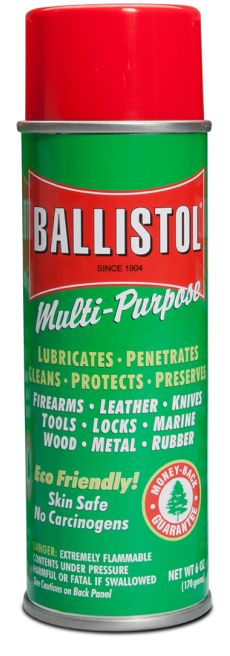
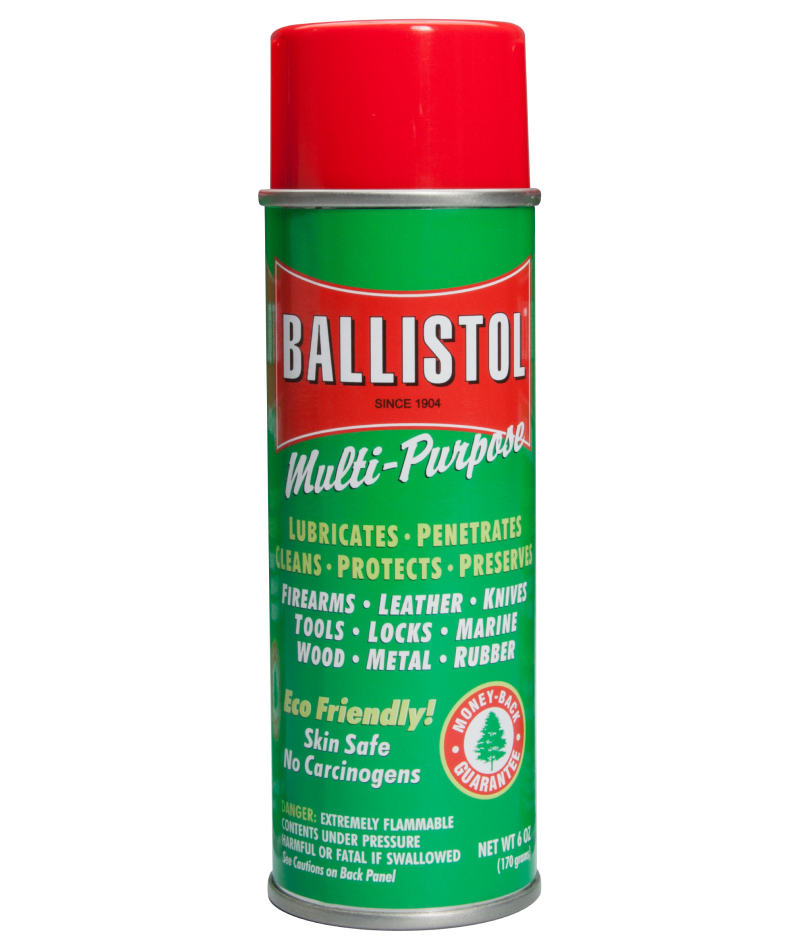
Ballistol multi-purpose spray can with a young plant on a blurred natural background

Safe for Your Paint, Your Hands, and the Planet

Ballistol is biodegradable, non-toxic, and skin-safe. Protect your vehicle's paint without gloves, fumes, or chemical runoff going down the driveway drain. It works on oil-resistant paints, lacquers, varnishes, and plastic trim without causing degradation. Once the volatile components evaporate, what remains is a practically odorless protectant working in the background. One note on rubber: most oil-resistant rubber seals handle it fine, but rubbers not chemically resistant to mineral oils can become brittle over time with extended contact, so a spot test is the smart move on older or unfamiliar seals. 

Always As Good As The Day You Bought It.

Most protective oils have a shelf life problem. Over time they oxidize, thicken into a sticky film, and eventually harden into a crusty residue that does more harm than good on a painted surface. Ballistol is built differently. A combination of antioxidants keeps the formula stable year after year, so the bottle sitting in your garage works just as well next season as it does today.

How stable? In 1985, a forgotten bottle of Ballistol turned up in an attic after sitting untouched for over six decades. Lab analysis showed the oil was chemically identical to a fresh batch. That kind of long term stability is what makes Ballistol an invisible protective layer you can trust season after season.

Frequently Asked Questions

Can Ballistol be used on paint protection film or a clear bra?

Absolutely. Ballistol is safe for use on oil-resistant paints, lacquers, and varnishes. On panels without PPF or clear bra coverage, it keeps paint clean and water-repellent between full details. For the protective film itself, check with your installer before applying any oil-based product directly to the thermoplastic urethane surface. Many drivers pair Ballistol with a protective film on the full front and use it to maintain the uncovered panels everywhere else. As with any new or treated surface, a spot test on an inconspicuous area is always the smart first step.

Will Ballistol remove bird droppings and bug splatter without scratching the clear coat?

Yes. The alkaline formula neutralizes the mild acids in bird droppings and insect residue, the same acids that etch through a vehicle's paint when left to sit. Apply a small amount to a soft microfiber cloth, let it dwell on the contamination briefly, and wipe gently. The mess lifts without the scrubbing pressure that creates swirl marks across the clear coat. Getting to it early makes the job easier, but Ballistol handles older buildup too.

Does Ballistol make paint water-repellent?

You bet. A thin film polishes painted surfaces and makes them water-repellent, which is especially useful on the front bumper, hood, and front fenders that take the most road debris and weather exposure. Apply it with a soft cloth, let it sit for a moment, and wipe clean for a brightening boost with no extra steps. Just keep the application thin. Too much will dull the finish instead of enhancing it.

Is Ballistol safe to use on plastic trim and vinyl alongside the paint?

Yes. Ballistol is safe for use on PVC, polyethylene, and other oil-resistant plastics and vinyl surfaces. It protects and cleans compatible plastic trim, door panels, and vinyl without causing damage, making it useful for interior protection as well as exterior surfaces. For rubber components, confirm they are mineral-oil resistant before extended use, as some rubber types can become brittle over time with prolonged contact.

How often should I apply Ballistol to my vehicle's paint?

It depends on how much the vehicle gets driven and what it faces. For daily drivers dealing with road hazards and regular contamination, a light application every few weeks keeps the water-repellent layer fresh. For vehicles in storage or light use, one treatment before storing and another when it comes back out covers it. Ballistol does not build up or leave sticky residue, so applying it more often causes no problems.

OTHER UNIQUE FEATURES & USES

The most astounding feature of Ballistol is perhaps its universality. There are other protectants/lubricants in the market, but none have the same wide range of applications, in combination with other unique capabilities, as compared to Ballistol.

Ballistol can be used to clean, to preserve, to protect, to prevent corrosion, and maintain not only objects made out of metal but also wood, hard plastics, and even smooth leather. WARNING: Do not use on suede.

While most other brands are pH-neutral, i.e. have a pH around 7, Ballistol has a pH between 8 and 8.5. This is why Ballistol is capable of neutralizing mild acids and human hand sweat, which is of a slightly acidic nature.

Ballistol does not resinify. Most other lubricants are subject to relatively fast aging and oxidation. They harden in time – a process which is called “resinification.” The oil begins to thicken, becomes sticky, gluey, and finally turns into a hard resinous substance. By contrast, Ballistol contains a combination of anti-oxidants and medical oils, which together make it much less susceptible to the process of aging than other lubricants.

SOME OF BALLISTOL’S 1,001 USES:

  • Lubricates hinges, door locks, padlocks, scissors, pocket knives, bicycle chains, and more
  • Cleans silver and brass
  • Lubricates moving mechanical parts of typewriters, video cameras, printing calculators, etc.
  • Rejuvenates wood surfaces, especially antique furniture
  • Cleans and impregnates leather boots, saddles, jackets, motorcycle clothing, saddle bags, hoisters, slings, and belts
  • Keeps battery terminals free of corrosion and neutralizes spilled acid
  • Removes tar and insect stains from motor vehicles
  • Inhibits corrosion from salt and salt water
  • Winterizes motors, neutralizes acidic residues from fuel combustion in engines
  • Helps extract water from fuel tanks
  • Shines gel coat on fiberglass boats
  • Protects electrical contacts on boats and trailers
  • Removes traces of lead, copper, and tombac from bores and chambers of firearms
  • Neutralizes acidic residues in black powder guns
  • Removes ball-point pen ink from smooth surfaces
  • Frees calcium-locked faucets